
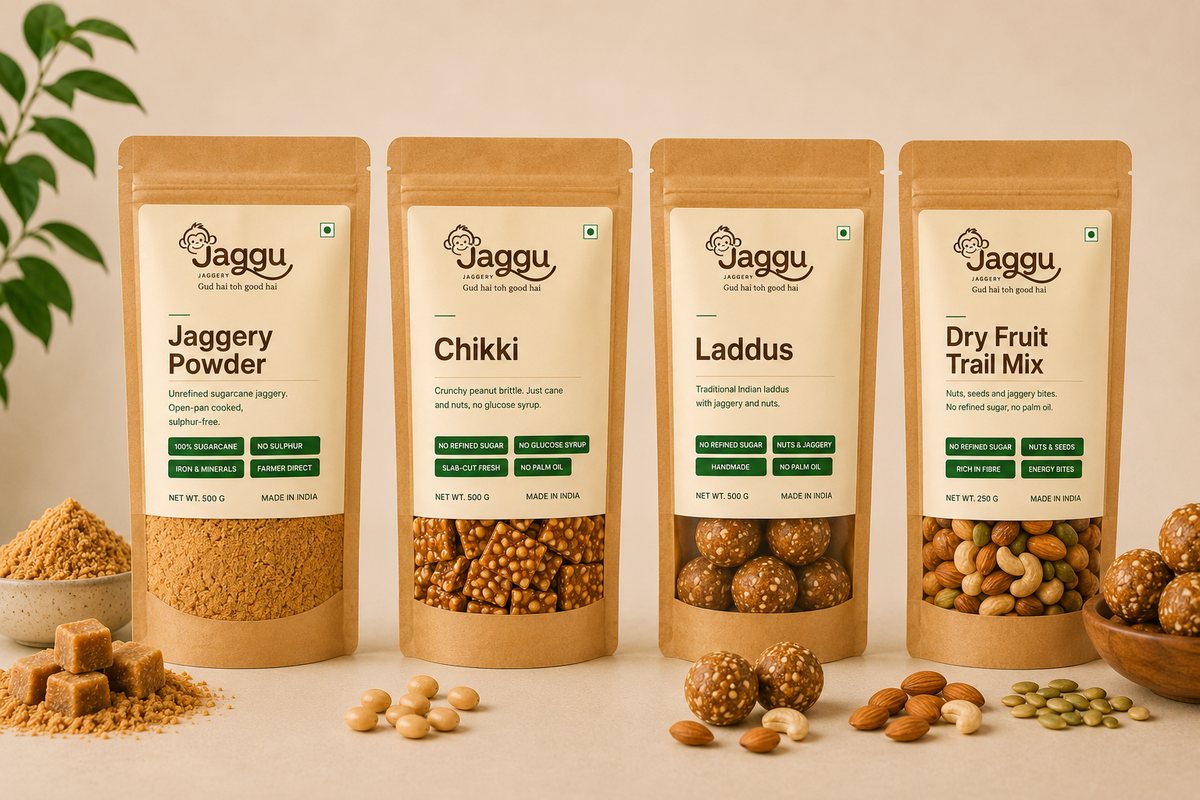
The proper monthly shop
The Family Pack
1,750g total- Jaggery Powder 500g
- Jaggery Chikki 500g
- Jaggery Laddus 500g
- Jaggery Dry Fruit Trail Mix 250g
₹1,189

Refining strips gud of its molasses — which is exactly where the caramel, the warmth and the colour live. We leave all of it in, then put it in shapes that fit an actual day.
Boxes & bundles
The same four things in four sizes — from a first try to a month's worth for a house that gets through it. Every box costs around 10% less than the packs would separately, and the saving is printed on each one.
The proper monthly shop
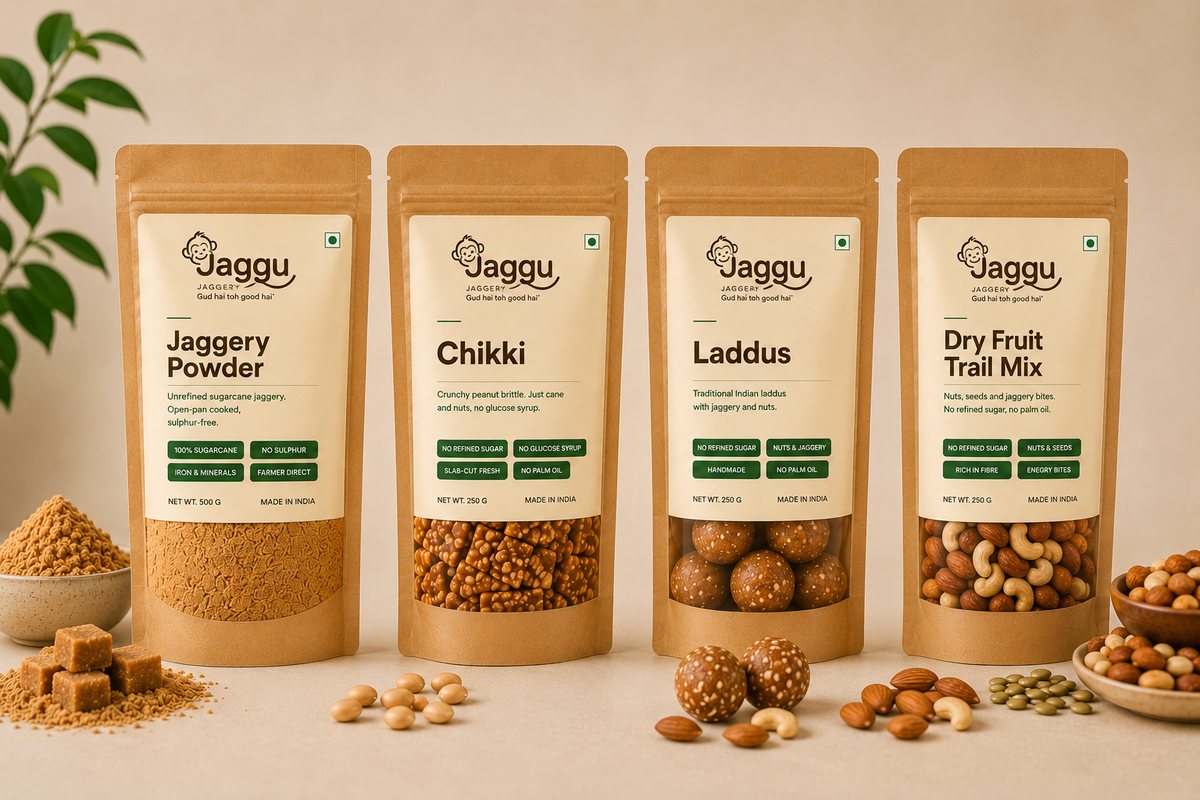
For a kitchen that gets through it
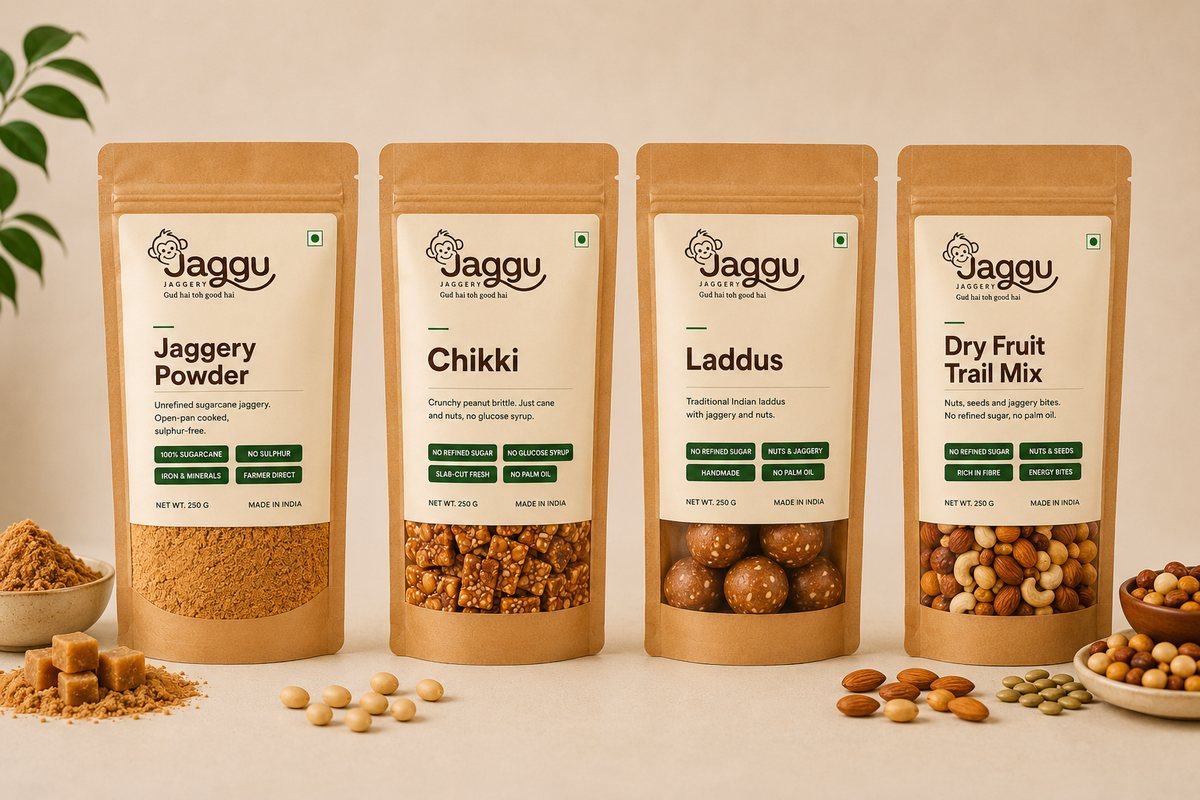
All four, in small
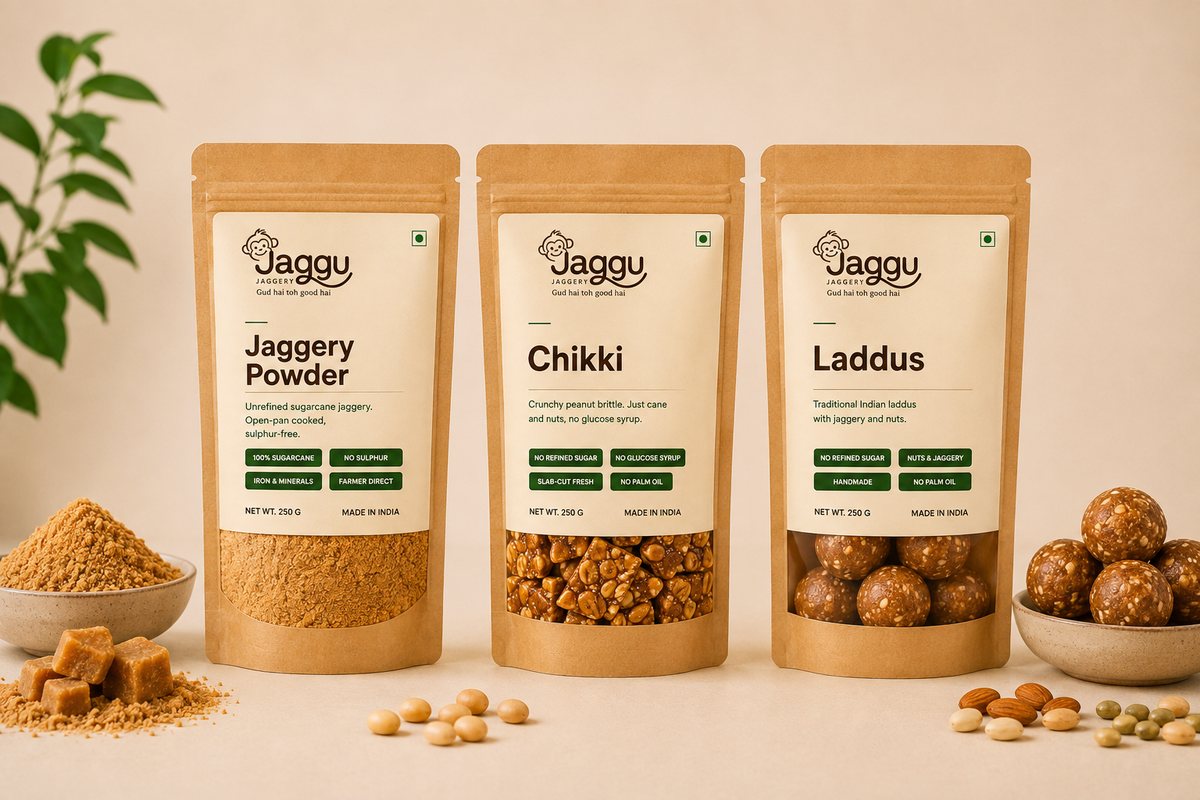
Three to start with
Why switch to jaggery?
We're not going to tell you jaggery is a health food. Here's what actually changes when you make the switch.
Unlike white sugar, which is heavily refined, sulphited, and decolourised until it's almost pure sucrose, jaggery is simply made by boiling sugarcane juice. That's it.
Because it isn't heavily processed, jaggery retains naturally occurring minerals like iron, calcium, magnesium, and potassium. It's not a supplement, but it hasn't been stripped of everything except sweetness either.
Jaggery brings depth to every bite with notes of caramel, molasses, and a subtle fruitiness. White sugar is designed to be neutral. Jaggery is meant to add character.
You're still enjoying sweetness, just in a form that's closer to where it came from. Less refining. More flavour. A more authentic way to sweeten your everyday favourites.
What we won't claim: jaggery has roughly the same calories as sugar, and it isn't a low-sugar or diabetic-friendly food. If you're sweetening something anyway, sweeten it with something that still tastes of where it came from.
Where it comes from
Our gud is made in the sugarcane belt of Uttar Pradesh, in village kolhus that have worked the same way for generations.

Jaggu's honesty test
It's often jaggery that's been made to look a certain way. Real jaggery is usually deeper in colour, with a matte finish and natural variation from batch to batch because sugarcane changes with the soil, the season, and the harvest.
An unusually bright, uniform block can be a sign that additives or processing aids, such as baking soda or whitening agents, have been used to alter its appearance.
We'll show you how to check ours. And anyone else's.
Learn the test